
Global Trends report
- Key trends and latest numbers of refugees, asylum-seekers, internally displaced and stateless people worldwide.
- Latest numbers of people who have returned to their countries or areas of origin.
At UNHCR we work with data and statistics, which are helping us to understand important information to save, protect and improve the lives of refugees, other forcibly displaced and stateless people. Based on good data, we can make informed decisions around our work and better plan for future operations. Data also allows us to demonstrate accountability to beneficiaries, governments, partners and donors in a tangible and comparable way.
Our vision, strategic priorities and key actions are outlined in our Data Transformation Strategy.
The collection and use of refugee data are mandated by the 1951 Refugee Convention and by the Statute of the Office of the High Commissioner for Refugees. The confidentiality of refugee data and related information is highly respected by UNHCR and our partners and the processing and protection of personal data are anchored in UNHCR's Data Protection Policy. To learn more about the collection of refugee data read the Registration and Identity Management Guidelines.
Flagship reports and datasets covering forced displacement, funding, and global trends.
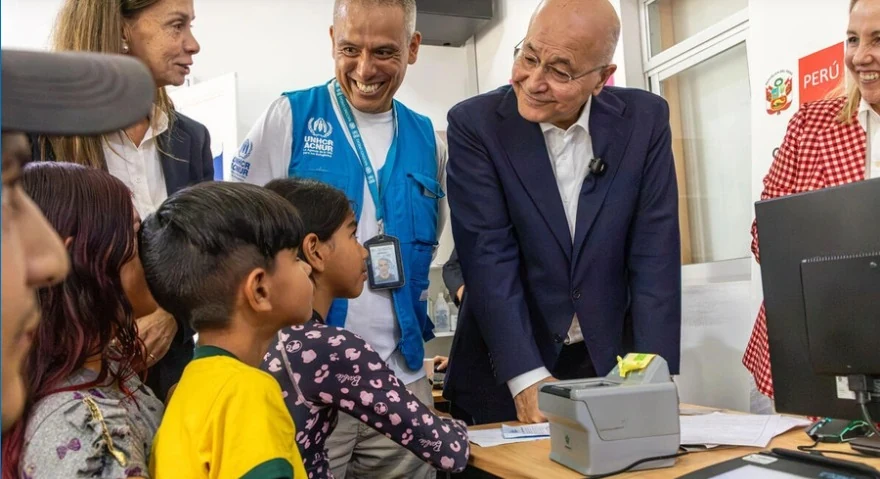
Data management systems and statistical databases help us and our partners to improve our work, optimize our resources and make informed evidence-based decisions. Find a selection of platforms and tools below:
The database provides statistics on global forced displacement, including about UNHCR's populations of concern from 1951 until today.
This section provides key financial reports – including the Global Appeal and Global Report – and up-to-date information on flexible funding, underfunding, budget, expenditure and donor contributions.
Inter-agency coordination portal showing operational information about selected current emergencies.
The Microdata library provides access to microdata containing information at the individual level about refugees and other persons of concern to UNHCR.
This page gathers all recent handbooks and toolkits issued by UNHCR. They provide guidance, practical tools and resources on key topics related to UNHCR's work worldwide.
An early warning grid-based risk modelling system that aims to help countries better predict and respond to climate-induced forced displacement.
An innovative project that combines earth observation and machine learning to estimate socioeconomic conditions in refugee, IDP and host community settlements.
Storymaps and interactive visualizations bringing displacement data to life.
Forced to flee their homes but remaining in their countries, the internally displaced are among the world's most vulnerable people.
The influx to Bangladesh is one of the largest and fastest-growing refugee crises in decades.
The maps, stats and facts on how the pandemic has impeded efforts to protect the displaced and affected their access to basic rights.